
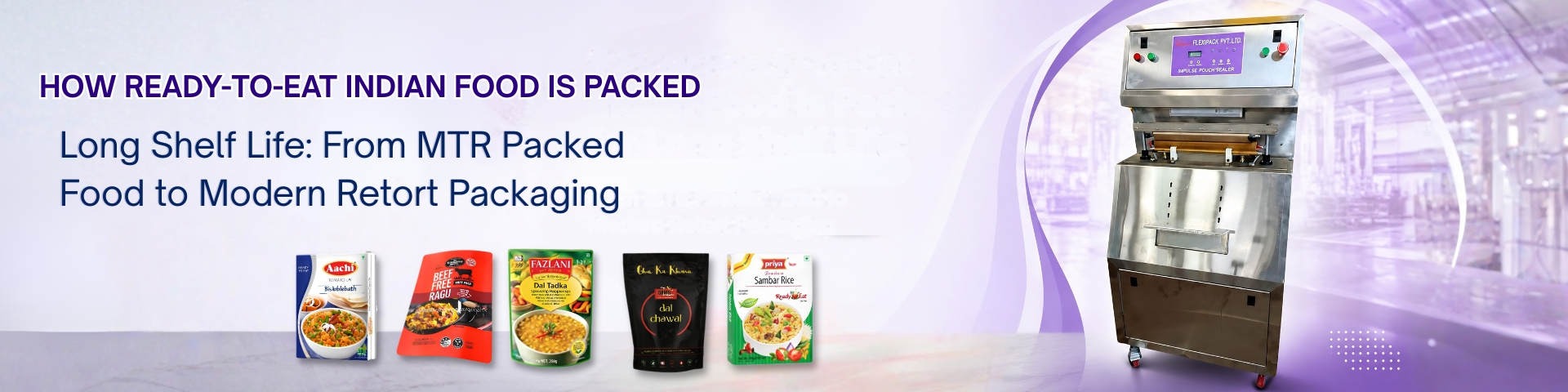
Ready-to-eat Indian food has changed the way consumers purchase and prepare meals. Products such as curries, paneer gravies, soups, rice dishes and complete meal combinations allow consumers to enjoy familiar foods with significantly less preparation time.
The growth of this category has also changed the requirements for food packaging. A ready-to-eat meal cannot simply be placed in a conventional pouch and shipped to a customer. The packaging must protect the food from contamination, withstand handling and transportation, maintain product integrity and work with the food preservation process used by the manufacturer.
This is why packaging technology has become an important part of the ready-to-eat food industry.
When people search for MTR Packed Food, they may be looking for information about the type of packaged meals available in the market, how these products achieve convenience and shelf stability, or what packaging technology is used for similar ready-to-eat foods. MTR Foods’ own ready-to-eat range includes products such as soups, vegetable curries, paneer gravies and rice items, illustrating the variety of foods that fall within this category.
For food manufacturers, the more important question is what happens behind the package: how are ready-to-eat meals packed so that they can be safely stored, transported and consumed later?
This guide explains the packaging process, the role of retort pouches, the importance of seal integrity and the machinery considerations manufacturers should understand before selecting a packaging solution.
What Is Ready-to-Eat Food Packaging?
Ready-to-eat food packaging is the combination of packaging materials, filling, sealing, processing and quality-control practices used to protect prepared food until it reaches the consumer.
Unlike dry packaged foods, ready-to-eat products often contain:
- Water
- Gravies
- Oils
- Spices
- Vegetables
- Lentils
- Dairy ingredients
- Meat or protein ingredients
These characteristics make packaging more demanding.
A pouch containing a dry spice mix has very different requirements from a pouch containing a high-moisture curry.
The packaging system therefore has to be selected according to the product formulation, consistency, processing method, pouch structure and expected distribution conditions.
Why Shelf Life Is Important for Ready-to-Eat Food
Shelf life is especially important for packaged meals because the product may travel through several stages before consumption.
A typical supply chain can involve:
Processing → Manufacturing → Packaging → Warehouse → Distributor → Retailer → Consumer
During this journey, the package must remain intact.
Packaging failure can result in:
- Leakage
- Loss of product quality
- Contamination
- Reduced shelf life
- Product rejection
- Transportation losses
- Customer complaints
For manufacturers selling products across multiple states or exporting food internationally, reliable packaging becomes even more important.
How Retort Pouches Are Used for Ready-to-Eat Meals
Retort pouches are flexible packages designed to withstand controlled thermal processing after filling and sealing.
Their multilayer construction provides protection against environmental factors while allowing the finished package to remain lightweight and relatively compact.
A simplified ready-to-eat retort packaging workflow is:
Food preparation
↓
Filling into retort-grade pouch
↓
Pouch sealing
↓
Retort processing
↓
Cooling
↓
Inspection and quality control
↓
Storage and distribution
The exact processing conditions depend on the product, formulation, pouch structure and validated process used by the manufacturer.
This distinction is important: a retort pouch itself does not automatically make food shelf-stable. The packaging material, sealing quality and validated thermal process must work together.
Why Seal Quality Matters in Ready-to-Eat Food
One of the most overlooked parts of ready-to-eat packaging is the seal.
A pouch can have an excellent barrier structure, but if the seal is inconsistent, the package may fail.
Potential problems include:
Leakage
Liquid or semi-liquid products can escape through weak or incomplete seals.
Contamination
A compromised seal can allow unwanted external contamination.
Loss of Shelf Stability
The integrity of the sealed package is part of maintaining the controlled environment required after processing.
Product Rejection
Manufacturers may need to reject packages showing visible seal defects or other quality problems.
This is why manufacturers need a sealing system capable of producing consistent results across production batches.
Internal Link: Retort Pouch Sealer
What Types of Food Can Be Packed in Retort Pouches?
Retort pouch packaging is suitable for a wide range of prepared foods, subject to appropriate product and process validation.
Indian Curries
Products such as:
- Paneer gravies
- Dal-based dishes
- Vegetable curries
- Rajma
- Chole
- Regional curry preparations
can require packaging capable of handling moisture, oils and sauces.
Rice-Based Meals
Ready-to-eat rice products can include:
- Biryani
- Jeera rice
- Vegetable rice
- Regional rice preparations
The packaging system needs to account for the physical characteristics of the food as well as the required processing conditions.
Soups
Soups and other liquid foods require particular attention to filling accuracy and seal cleanliness because product contamination in the seal area can compromise package integrity.
Internal Link: Soup Retort Pouch Sealer
Paneer Gravies
Paneer-based products are an important category in Indian ready-to-eat food.
Examples include:
- Paneer Butter Masala
- Paneer Masala
- Kadai Paneer
- Other paneer gravy preparations
Internal Link: Paneer Masala Packing Machine
MTR Packed Food and the Growth of the Ready-to-Eat Category
The popularity of brands offering ready-to-eat meals demonstrates the wider consumer shift toward convenient prepared food.
MTR Foods, for example, currently lists ready-to-eat soups, vegetable curries, paneer gravies and rice items within its product range.
The important takeaway for manufacturers is not the brand itself, but the range of food formats that consumers now expect to be available in convenient packaged forms.
This creates opportunities for food businesses producing:
- Regional Indian meals
- Private-label ready meals
- Institutional food
- Export-oriented Indian cuisine
- Contract-packed meals
- Specialty vegetarian meals
- Protein-based ready meals
As the category expands, packaging machinery must become increasingly adaptable to different products and pouch formats.
What Manufacturers Should Consider Before Choosing a Packaging Machine
Choosing machinery based only on production speed can create problems later.
Manufacturers should evaluate at least six factors.
1. Product Consistency
Is the product a thin liquid, thick gravy, semi-solid meal or combination of solids and liquid?
The answer affects filling and sealing requirements.
2. Pouch Size
Different retail pack sizes may require different machine configurations.
3. Production Volume
A small food business may have very different requirements from an established manufacturer producing thousands of pouches per shift.
4. Packaging Material
The machine must be compatible with the selected pouch structure and sealing requirements.
5. Hygiene
Food-contact and packaging equipment should be designed to support appropriate cleaning and hygienic production practices.
6. Future Expansion
A machine should ideally support the manufacturer’s expected production growth rather than only today’s requirements.
Why Stainless Steel Construction Matters
Food processing environments involve regular cleaning, moisture and exposure to food ingredients.
Stainless steel construction is therefore widely preferred for food-processing machinery because it offers:
- Corrosion resistance
- Durability
- Easier cleaning
- A hygienic equipment surface
- Suitability for demanding production environments
For manufacturers producing ready-to-eat food at commercial scale, machine construction is an important part of the overall hygiene and maintenance strategy.
Internal Link: Retort Suitable Pouch Sealer – 2 Head Stainless Steel, Food Grade, GMP Model
The Role of Sealing Equipment in Product Quality
The sealing stage connects packaging technology with actual production quality.
A suitable sealing machine should provide controlled and repeatable sealing conditions rather than relying heavily on manual adjustments.
Important considerations include:
- Consistent sealing temperature
- Appropriate sealing pressure
- Correct pouch positioning
- Clean sealing areas
- Repeatable machine settings
- Routine inspection of finished seals
Manufacturers should establish their own quality-control procedures and validate sealing and thermal-processing conditions for their specific product and packaging combination.
This is particularly important because there is no single machine setting that is automatically correct for every food product or pouch material.
Common Mistakes in Ready-to-Eat Food Packaging
Choosing Machinery Based Only on Speed
High output is not useful if rejection rates increase.
Manufacturers should consider the relationship between throughput, consistency and quality control.
Ignoring the Product Characteristics
A thick curry, soup and mixed rice meal behave differently during filling and sealing.
Using the Wrong Pouch Structure
The packaging material must be selected according to the product and processing requirements.
Neglecting Seal Inspection
Regular seal inspection can help identify problems before defective packages reach distribution.
Treating Retort Processing as a One-Size-Fits-All Process
Thermal processing needs to be developed and validated for the specific food product, packaging configuration and process requirements.
How Manufacturers Can Improve Ready-to-Eat Packaging Quality
A strong packaging operation combines equipment, materials, people and process controls.
Manufacturers can improve consistency by:
- Selecting appropriate retort-grade packaging materials.
- Establishing validated filling and sealing procedures.
- Maintaining clean sealing areas.
- Monitoring critical machine parameters.
- Performing routine seal inspections.
- Training operators properly.
- Maintaining equipment according to manufacturer recommendations.
- Documenting quality checks and production parameters.
This approach creates a more reliable packaging process than simply purchasing a faster machine.
Retort Packaging for Domestic and Export Markets
Ready-to-eat food manufacturers increasingly serve customers beyond their immediate local market.
Retort packaging can be particularly useful where products need to travel long distances because lightweight flexible packaging can reduce bulk compared with some rigid packaging formats.
For export-oriented businesses, manufacturers also need to consider:
- Destination-market requirements
- Food-contact packaging compliance
- Labelling requirements
- Transportation conditions
- Storage conditions
- Product-specific shelf-life validation
Packaging should therefore be considered as part of the complete export strategy rather than as an isolated production step.
Choosing a Retort Pouch Sealer for Your Food Business
The right machine depends on the manufacturer’s actual application.
A business producing a relatively small range of ready-to-eat meals may have different requirements from a high-volume food manufacturer serving multiple markets.
Before purchasing, ask:
What products will be packed?
List the actual products rather than choosing a machine based on a generic category.
What is the required output?
Estimate realistic production requirements rather than selecting equipment solely on its maximum advertised capacity.
What pouch materials and sizes will be used?
Confirm compatibility before finalising the machine.
What level of hygiene is required?
Food-grade construction may be particularly important for manufacturers operating in controlled food-processing environments.
What will production look like in three to five years?
Consider whether the selected machine can support future expansion.
Building a Reliable Ready-to-Eat Food Packaging Line
A successful ready-to-eat food packaging operation is rarely dependent on one machine alone.
The overall workflow can include:
Food Preparation
↓
Product Filling
↓
Pouch Handling
↓
Sealing
↓
Retort Processing
↓
Cooling
↓
Inspection
↓
Secondary Packaging
↓
Storage & Distribution
Each stage contributes to the final quality of the product.
This is why food manufacturers should evaluate their packaging line as a complete system rather than selecting equipment based on one keyword or one specification.
Conclusion
The success of ready-to-eat food depends on much more than the recipe. Packaging has to protect the product from the point of production through storage, transportation and final consumption.
The popularity of ready-to-eat categories represented by products such as MTR Packed Food demonstrates the growing consumer demand for convenient packaged Indian meals. For manufacturers entering or expanding in this market, the focus should be on building a complete packaging process that combines appropriate pouch materials, accurate filling, reliable sealing, validated processing and consistent quality control.
A well-selected retort pouch sealer can become an important part of that system by helping manufacturers achieve repeatable pouch sealing for products such as curries, gravies, soups and ready-to-eat meals.
Shruti Flexipack provides retort pouch sealing solutions for manufacturers looking to develop reliable packaging operations for modern ready-to-eat food applications.
Frequently Asked Questions
Ready-to-eat curries can be packed using suitable flexible packaging formats, including retort pouches, depending on the product, packaging material and validated processing method.